


Types of Eyeglasses Along with Fit and Materials
Buying new glasses sounds simple until you start looking at the options. Suddenly you’re comparing frame materials, lens types, measurements, coatings, and styles that all seem slightly different from one another.
For some people, glasses are purely functional. They need a comfortable frame that helps them see clearly throughout the day. For others, eyewear is just as much about personal style as it is about vision correction. Most people fall somewhere in the middle.
The good news is that understanding eyeglass frames doesn’t require a background in optics. Once you know how frame, fit, materials, and lens choices work together, it becomes much easier to narrow down your options and find a pair you’ll actually enjoy wearing.
Whether you’re buying your first prescription glasses, updating an old pair, or shopping online for the first time, this guide covers the essentials. Let's have a closer look at the different types of eyeglasses along with fit and materials.
Face Shape And Frame Fit
Face shape isn’t the only thing that matters when choosing glasses, but it can be a useful starting point.
Most people naturally gravitate towards frames they like the look of, which is perfectly reasonable. The challenge is finding a frame that looks balanced once it’s actually on your face. That’s where face shape comes in.
A quick way to identify your face shape is to look at the widest part of your face, your jawline, and the overall proportions between width and length. You don’t need exact measurements. Most people can tell whether their face is oval, round, square, heart-shaped, diamond-shaped, or triangular after a quick look in the mirror.
Frame proportions matter just as much as frame shape. Very large frames can overwhelm smaller facial features, while narrow frames may look out of place on broader faces. A balanced fit often feels right immediately because the frame complements your features instead of competing with them.
Glasses For Face Shapes
There aren't any hard rules when it comes to matching glasses to your face shape. In fact, some people look best in styles that wouldn't traditionally be recommended to them. That said, a few general guidelines can help narrow down your options.
Oval faces are usually considered the easiest shape to fit because their proportions are naturally balanced. Most frame styles should be OK. From classic rectangular frames to rounder designs, the main goal is to try to avoid frames that are dramatically wider than the face itself.
Square faces often have stronger jawlines and more angular features. Frames that come with softer curves can create contrast and help balance sharper lines. Round and oval frames are common recommendations for this reason, and you will see many square-faced people choosing this option.
Round faces tend to benefit from frames that add a little bit more definition. Rectangular and geometric styles can create visual structure without looking too bold.
Heart-shaped faces tend to be wider at the forehead and narrower towards the chin. Frames that don't add too much weight to the upper part of the face often create a more balanced look. Try looking for bottom-heavy frames, as they suit heart-shaped faces the best.
Diamond-shaped faces are usually characterized by prominent cheekbones and a narrower forehead and jawline. Rimless and oval frames are often flattering choices because they soften angles without overwhelming your features. You'll notice that many sunglasses styles follow similar face-shape guidelines too.
Triangle face shapes generally have a wider jawline and a narrower upper face. In many cases, slightly broader upper frame sections help create visual balance. Frame rims can also add a distinctive style and make the process a little more fun.
That said, comfort should always win. A frame that fits properly and feels good to wear is usually a better choice than one that follows every face shape guideline perfectly.
Fit For Clear Vision And Comfort
Many people focus heavily on frame style and forget that fit directly affects vision.
Frame size also matters. Most eyeglass frames include measurements for lens width, bridge width, and temple arm length. These numbers can be especially helpful when buying glasses online.
Bridge fit deserves more attention than it usually gets. Some people have higher nose bridges, while others have lower or flatter bridges. A bridge that matches your facial structure helps keep the frame stable throughout the day. Low-bridge fit frames often use larger, angled nose pads for comfort.
Adjustable nose pads can also make a surprising difference. A small adjustment may improve comfort, reduce slipping, and help distribute weight more evenly across the nose. A perfect fit also helps prevent pinching, slipping, and pressure points.
Most people don’t think much about fit until something starts bothering them. Once a pair constantly slides down your nose or pinches behind your ears, it becomes impossible to ignore. Temple arms should rest securely over your ears without pressing into your head.
Lens Types And Vision Goals
Not every lens is designed for the same purpose.
Single-vision lenses remain the most common option and are designed to correct one field of vision, such as distance or reading.
Other lens types are intended for people whose vision needs change depending on the task. Someone who spends most of the day working on a computer may have different requirements from someone who frequently drives long distances.
The best lens choice often depends less on your prescription and more on how you spend your day. That’s why it’s worth thinking about your daily routine before selecting lenses. An anti-reflective coating helps reduce glare on eyeglass lenses. Transition lenses change tint based on light exposure.
Nylon Lenses
Nylon lenses are built for movement.
They’re lightweight and impact-resistant, which makes them a natural fit for driving, sports, and any active day in the sun. Because nylon holds up well to knocks and drops, it’s a dependable choice when your sunglasses need to keep pace with you rather than sit in a case.
Their lightweight also pays off in comfort. Over long stretches of wear, nylon lenses reduce the pressure and fatigue that heavier options can create, so your sunglasses stay easy on your face from morning to evening.
Glass Lenses
Glass lenses deliver the sharpest optics we offer.
If clarity is your priority, glass provides exceptional visual precision and color fidelity, letting you see the world exactly as it is. Few materials can match its true-to-life view.
Glass is also naturally scratch-resistant, holding its clarity over years of use. For wearers who value optical quality above all and want lenses that stay pristine, glass is the standard to beat.
Polarized Lenses
Polarized lenses are engineered to cut glare.
They filter the harsh, reflected light that bounces off water, roads, snow, and other flat surfaces — the kind of glare that strains your eyes and washes out detail.
The result is clearer vision, richer contrast, and more comfortable sight in bright conditions. For anyone who spends time near water, behind the wheel, or out in strong sun, polarized lenses make a noticeable difference in both comfort and safety.
Non-Polarized Lenses
Non-polarized lenses keep full protection without the glare filter.
They still deliver reliable tint and UV defense, and they shine in situations where you actually want to see reflected light — reading an LCD screen, a phone, or certain instrument panels, where polarization can make displays harder to view.
They’re also a straightforward, versatile everyday option for wearers who want dependable sun protection and a clean look without a specialized glare filter.
Every lens in the suite is available across these options, so you can choose the material and glare treatment that fit your priorities — durability, optical clarity, glare control, or everyday versatility.
Glasses Anatomy And Measurements
Understanding a few basic frame measurements can make comparing glasses much easier.
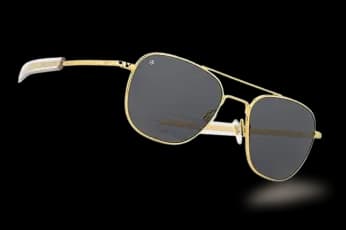
The main parts of a frame include the lenses, bridge, hinges connecting the front to the sides, nose pads, rims, temple arms, and temple tips. The bridge supports most of the frame’s weight, and the temples are the parts that sit over your ears. Rims can be full, semi-rimless, or rimless. Full-rim frames fully encircle the lenses and offer maximum durability. Semi-rimless frames cover only a portion of the lenses. Rimless frames are mounted directly to the bridge and the temples without a surrounding frame. If you’re shopping online, becoming familiar with these terms can help you interpret product descriptions more confidently.
The three measurements you’ll see most often are lens width, bridge width, and temple arm length. Together, they provide a useful starting point for assessing overall fit.
These measurements don’t tell the whole story, but they can help you avoid ordering frames that are obviously too large or too small.
Care, Maintenance, And Warranty Notes
A good pair of glasses can last for years, especially when you are taking care of them properly.
Cleaning lenses with a microfiber cloth and lens-safe cleaning solution helps remove dirt and fingerprints without damaging coatings. You should try to avoid things like clothing, paper towels, or tissues. They may seem harmless, but they can gradually create fine scratches.
When you’re not wearing your glasses, storing them in a protective case helps prevent damage. It’s a simple habit that can extend the life of both the frame and lenses.
It’s also worth checking hinges and screws occasionally. Small adjustments can prevent minor issues from becoming larger repairs later.
Conclusion
The best eyeglass frames combine comfort, function, and personal style. While frame shapes and materials often get the most attention, fit and lens selection are equally important for everyday wear.
By understanding the basics of frame materials, lens options, measurements, and face shape considerations, you’ll be in a much better position to choose glasses that look good and feel comfortable.
A little knowledge goes a long way. And when you find the right combination of frame, fit, and lenses, you’ll appreciate it every time you put your glasses on.
10% off your first purchase
Join our email list to be first to hear about new arrivals, limited-edition drops, sales, and more! *Offer excludes new and limited edition items.